- Role
- Concept, engineering, deployment
- Year
- 2026
- Status
- Live
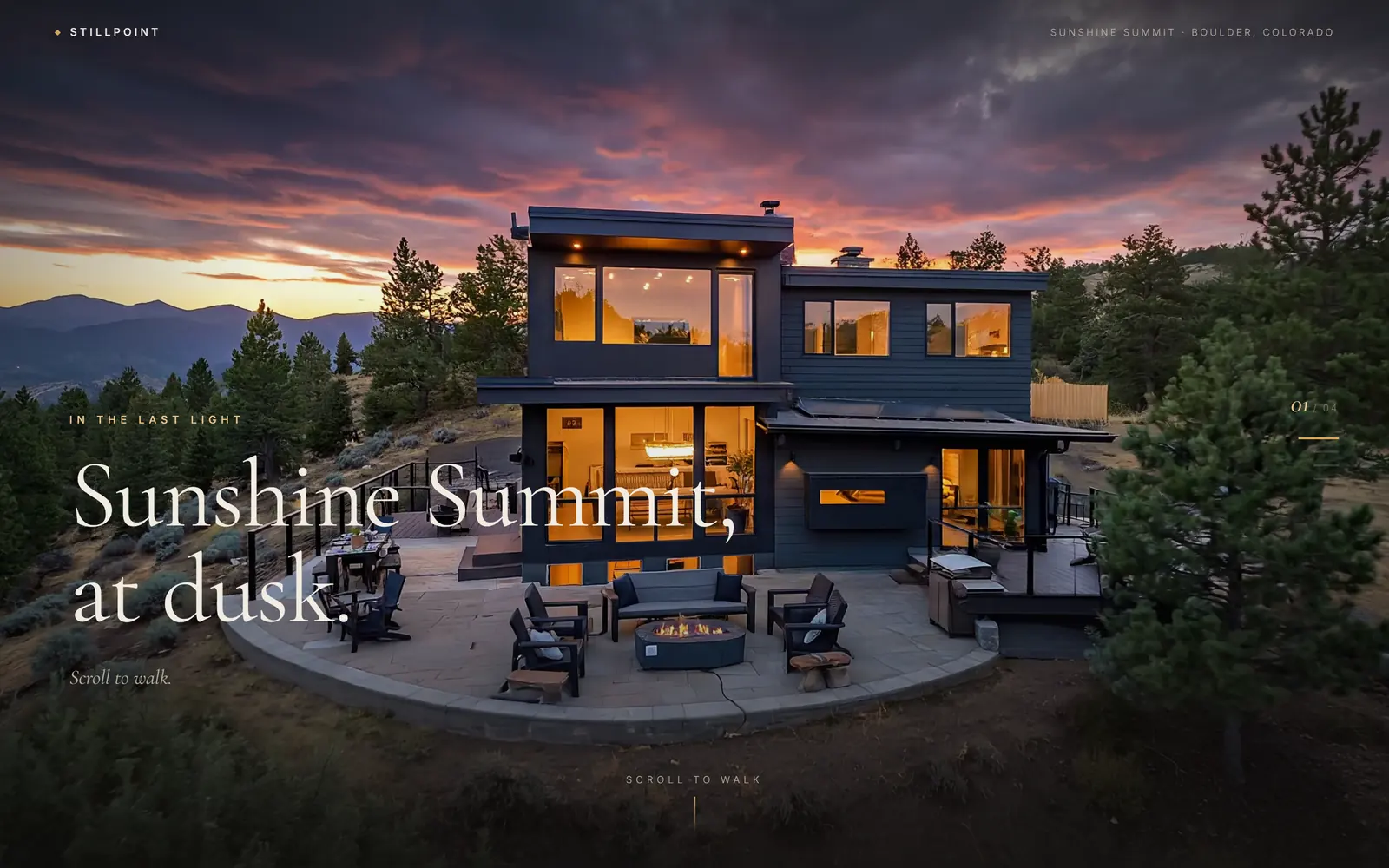
Overview
Short-stay listings all look the same: a grid of photos in a template, in the same order, with the same framing. Nothing about the grid conveys what the place feels like to be inside.
Luxora Studio is the alternative — a single page where scrolling moves you through the house at your own pace, arriving room by room and settling on each one, ending on the booking call to action.
The problem
Photo grids and autoplay video both fail the same way: the visitor has no control over pace, and nothing about the sequence tells a story.
Cinematic web experiences usually pay for their look with a slow, janky first load — which on a booking page costs the booking.
What I built
Scroll position drives the visuals directly: the page renders a prepared frame sequence to a canvas, so scrolling forward and backward is smooth and instant, and the visitor is always in control.
Assets are preloaded behind a deliberate opening screen, so the experience never stutters mid-walk. Motion is stabilized rather than handheld — the camera moves forward, it does not shake.
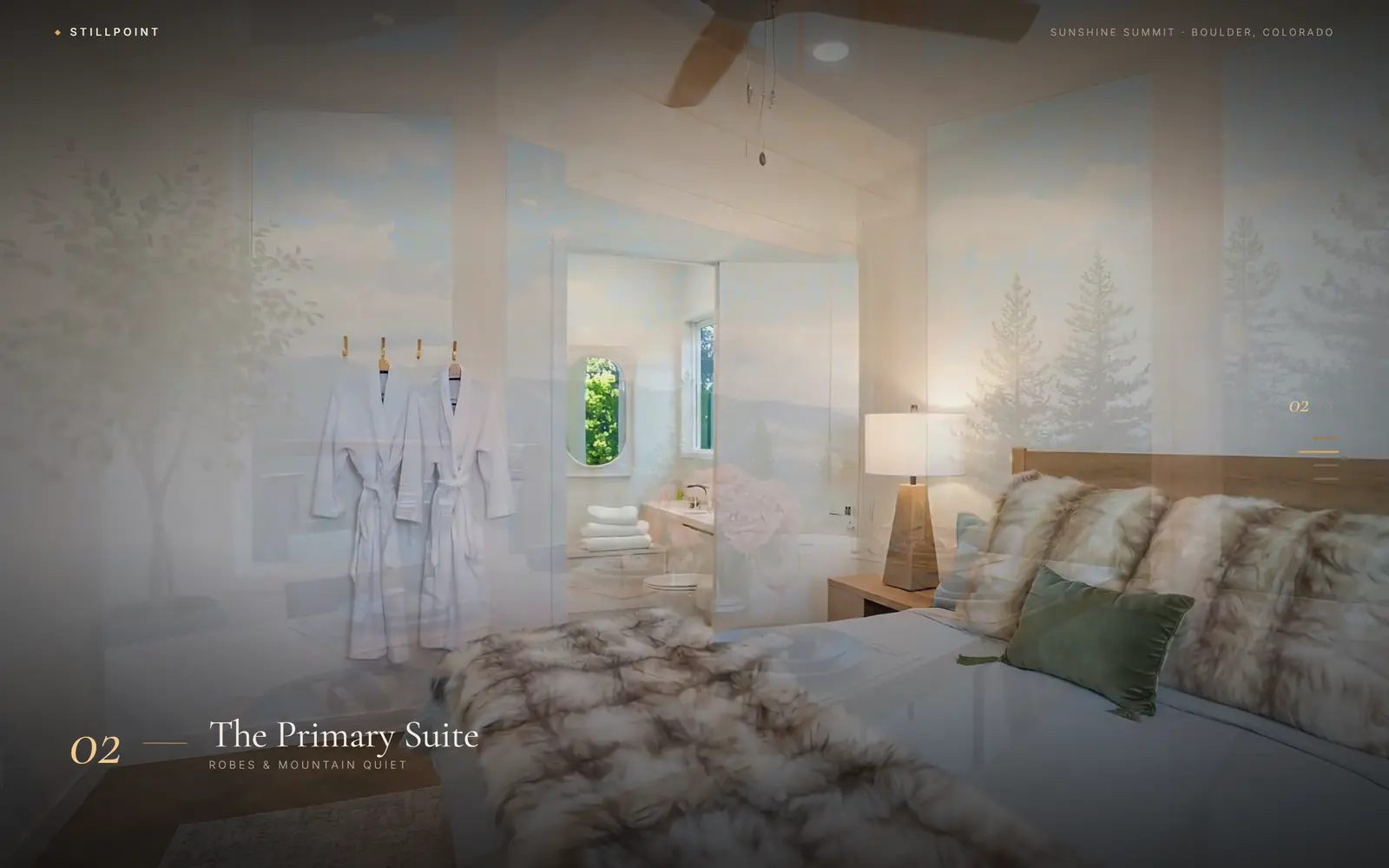
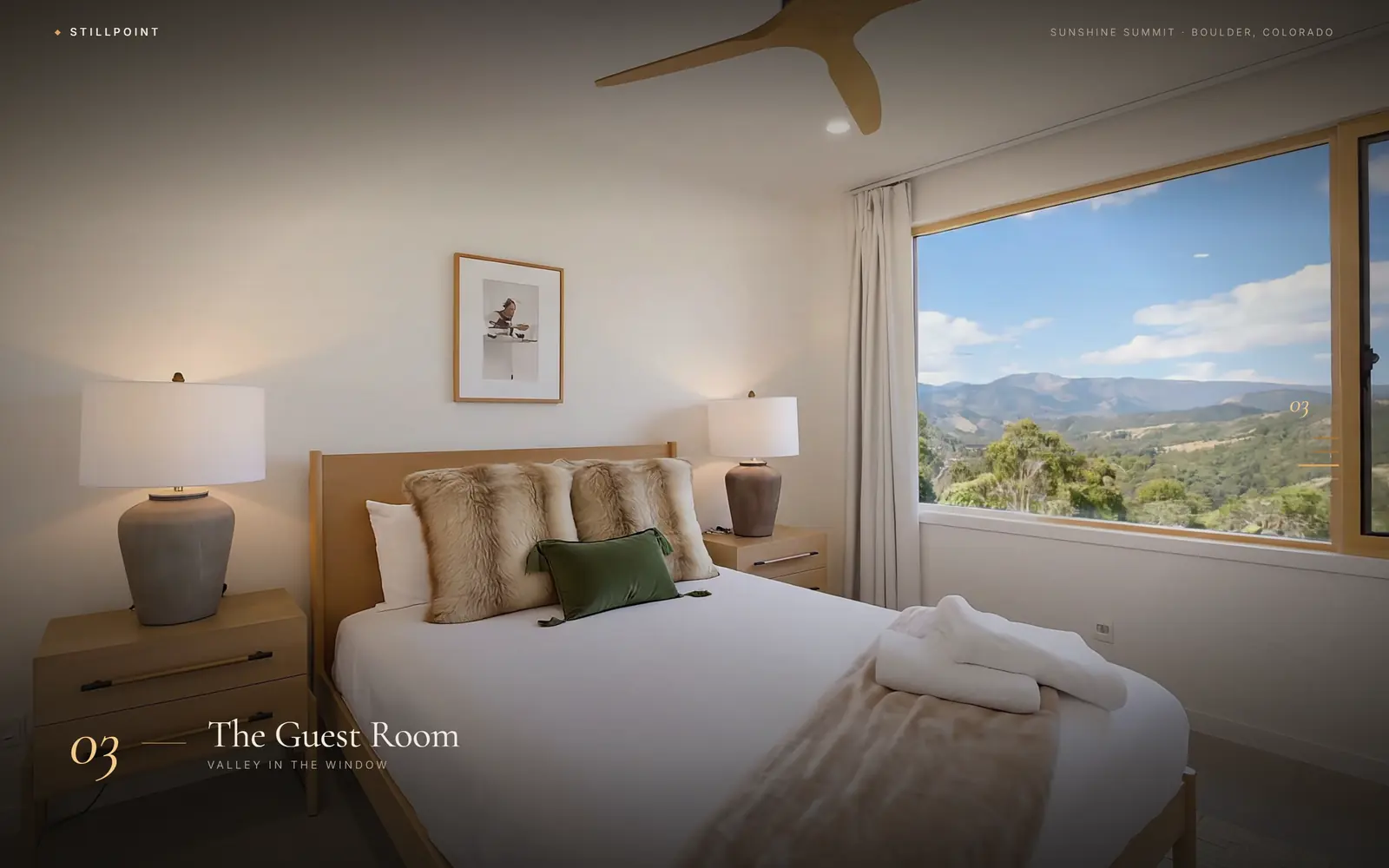
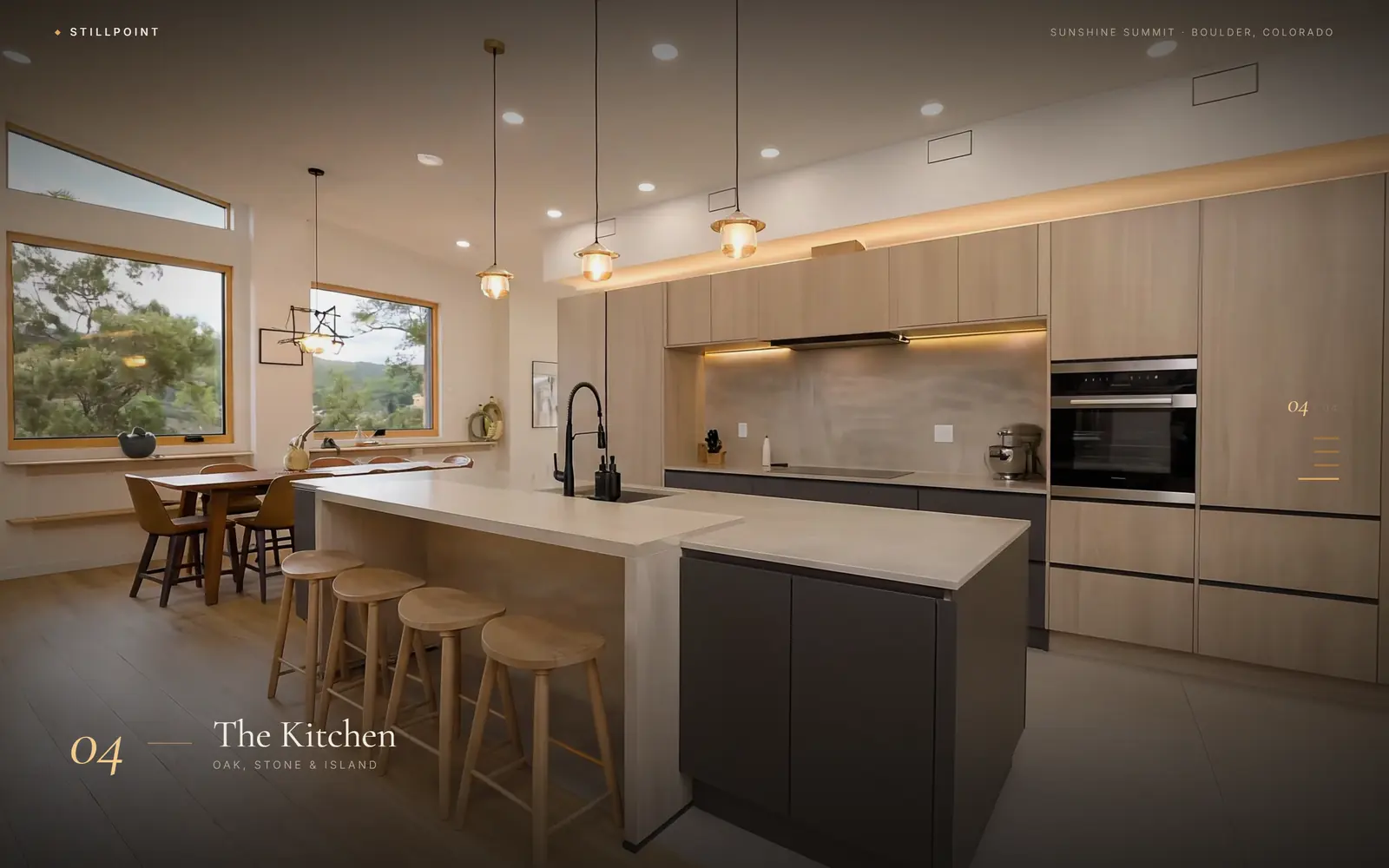
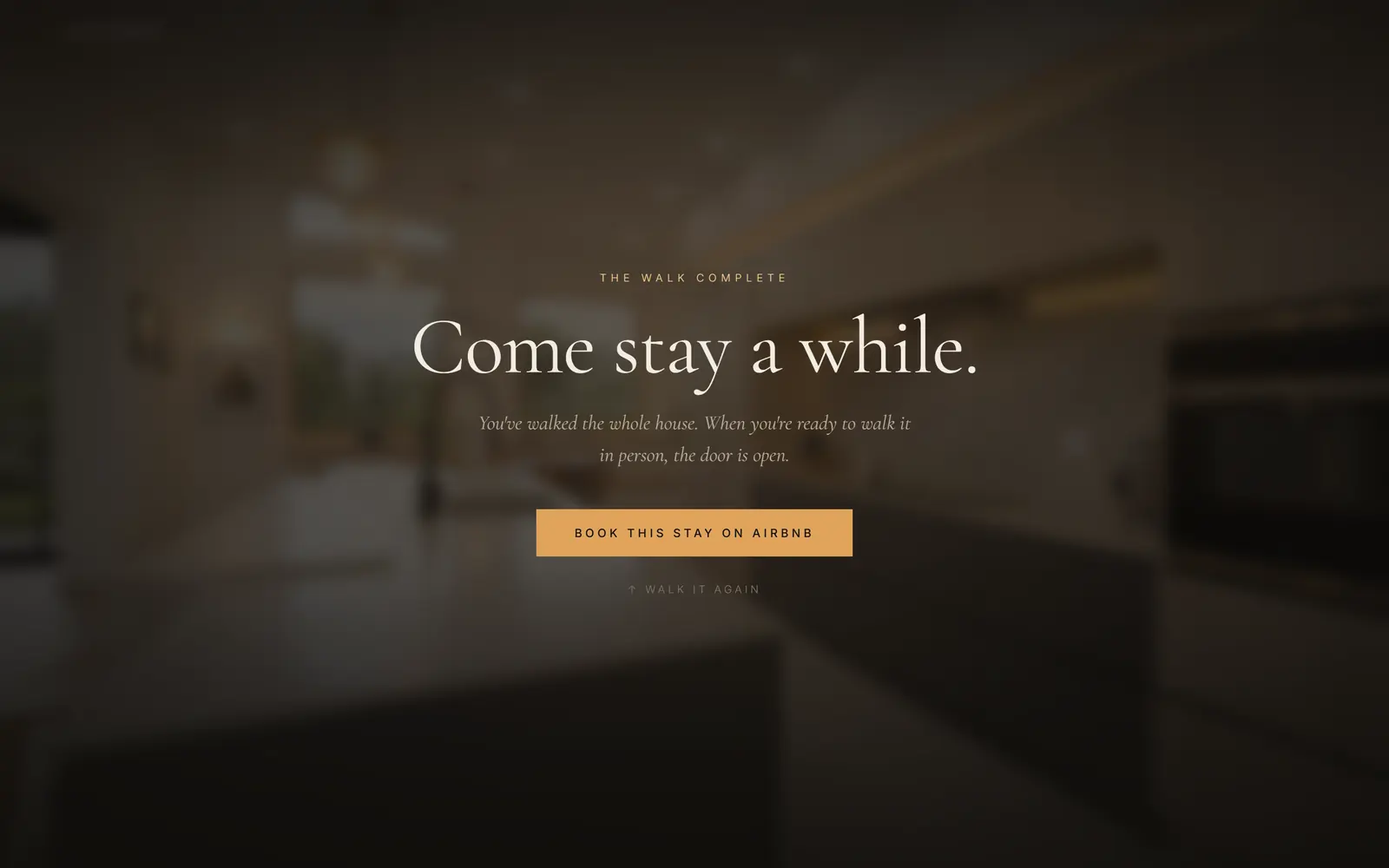
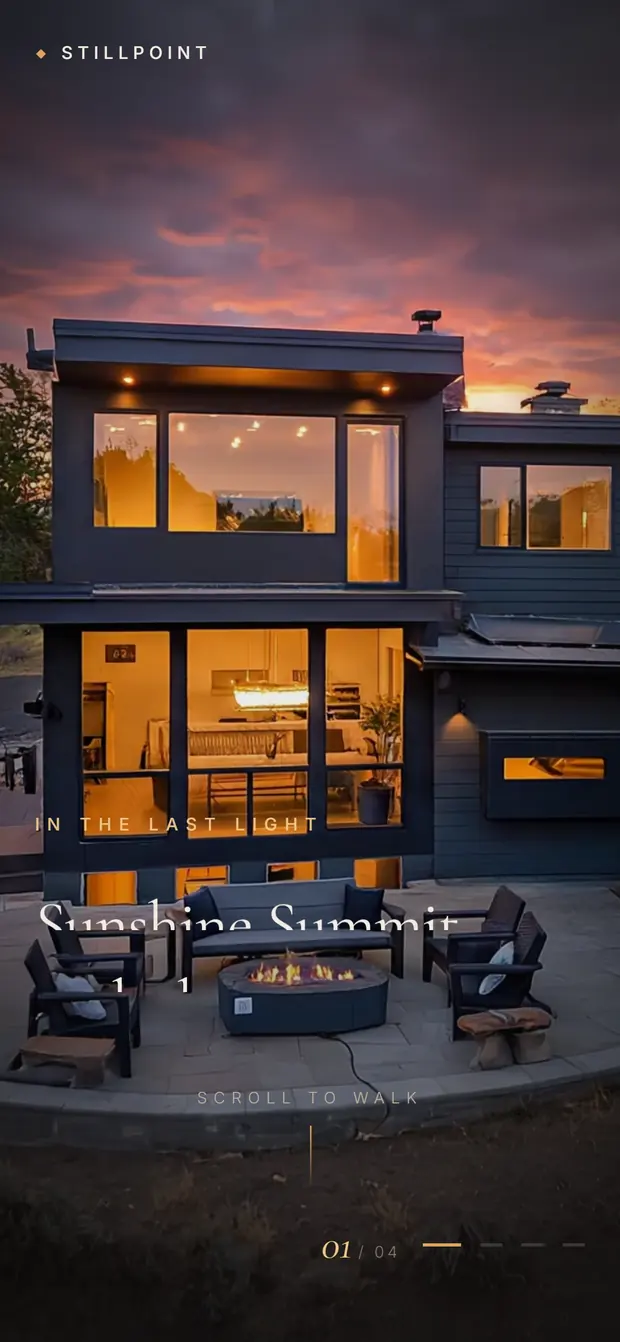
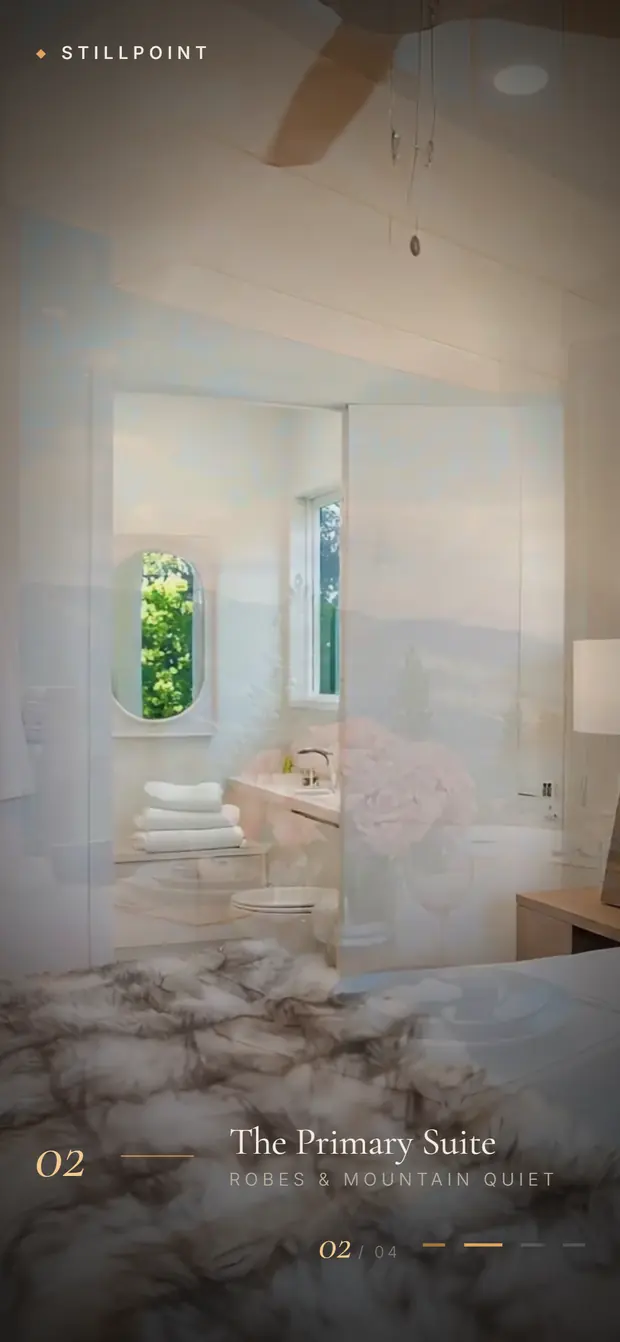
Each room arrives with a title card, and the walk ends where it should: an invitation to book the stay.
How it works
The path a single request takes through the system.
- 01
Prepare frames
The walkthrough is processed into an evenly decodable frame sequence, sized so any frame can be drawn instantly.
- 02
Preload deliberately
An opening screen holds the visitor for a moment while assets load, so the walk itself never buffers.
- 03
Bind scroll to time
Scroll progress maps to frame index and is drawn to a canvas, giving direct, reversible control of the movement.
- 04
Settle on rooms
Key positions hold and label each space, so the walk reads as a sequence of rooms rather than a continuous blur.
- 05
Close with the ask
The final scene resolves into a single call to action: book the stay.
Capabilities
Scroll-driven canvas
Frame-accurate playback bound to scroll position, forward and back.
Deliberate preloading
A designed loading moment instead of a stuttering first scroll.
Stabilized motion
Gimbal-steady movement — no bob, no roll, no simulated handheld shake.
Room chapters
Titled stops that give the walk structure and let visitors orient.
Editorial type
Restrained serif typography that carries the tone of the property.
Single conversion path
One clear action at the end of the experience: book.
The product
Screens captured from the live site.
Technology
- TypeScript
- React
- Canvas rendering
- Scroll-driven animation
- Media pipeline
- Web performance
- Hostinger
What changed
- The listing became an experience a visitor moves through, instead of a photo grid they scroll past.
- Playback stays smooth in both directions because frames are prepared and preloaded rather than streamed on demand.
- The page keeps one job: end the walk on the booking link.
Next case study
ReplyFlows